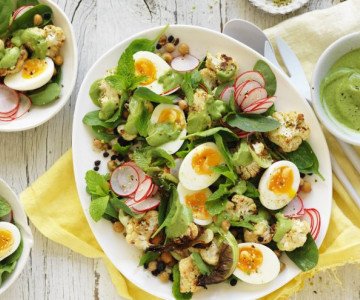
Lowering Cholesterol 7 Day Meal Plan
Eating a healthy diet can play a significant role in helping to reduce and manage cholesterol levels in the blood, in turn helping to reduce the risk of heart disease.
This site requires you to update your browser. Your browsing experience may be affected by not having the most up to date version.
Please visit browser-update.org to upgrade.
JavaScript has been disabled in your browser. Please enable JavaScript to experience the full functionality of our website.


An egg is raw potential, ready to be cracked open. Ready to be transformed. Ready to transform you. 17 different vitamins and nutrients*, including 12.7g of proteins, and hundreds of recipe ideas that can help power you, to a happier, healthier life.
Eggs can help power thousands of different ambitions; from running marathons to maintaining mental health. An egg can be eggsactly what you need it to be. Be humble, like the egg, but be proud of your achievements.
As you scramble through life, let every meal make a difference. The only limit with an egg is your imagination and your ambition.
So unlock your full potential, Live your life POWERED BY eggs. *in an average serve of two eggs.
The short answer is no.
The latest Heart Foundation guidance puts no limit on how many eggs healthy people can eat each week. The Heart Foundation state that eggs have a minimal effect on blood cholesterol levels and eggs are encouraged as part of a heart healthy eating pattern with a reminder to be mindful of what you choose to eat with them.
CSIRO research has also shown that eggs can be enjoyed on a daily basis. The CSIRO conducted a range of research, both in clinical trials and in a survey of more than 84,000 Australians, and found that egg consumption is actually linked to a better overall diet and a number of positive health outcomes.
Eating a healthy diet can play a significant role in helping to reduce and manage cholesterol levels in the blood, in turn helping to reduce the risk of heart disease.

Largely considered one of the world's healthiest eating patterns, the Mediterranean diet is often associated with supporting a reduced risk of various lifestyle-related diseases, including lowering the risk of heart disease and "bad" cholesterol levels.
Unlock exclusive content to better understand how eggs can be part of a heart healthy diet and cook delicious meals the whole family will enjoy.
Enter your details below to receive our eBook — filled with creative recipe ideas for a heart healthy diet — straight to your inbox!
Learn how recipes with eggs can be part of a heart healthy diet and cook delicious meals the whole family will enjoy.
By entering my personal information to receive this eBook, I authorise Australian Eggs to collect and process my personal information in accordance with the Australian Eggs Privacy Policy.

Just under 1 in 4 Australian adults, or 23% have a severe, mild, or moderate vitamin D deficiency. A further 43% is classified as having insufficient circulating vitamin D concentrations.

Are eggs really good for you? Learn about the important health benefits of eating eggs for everything from weight loss to mental health.
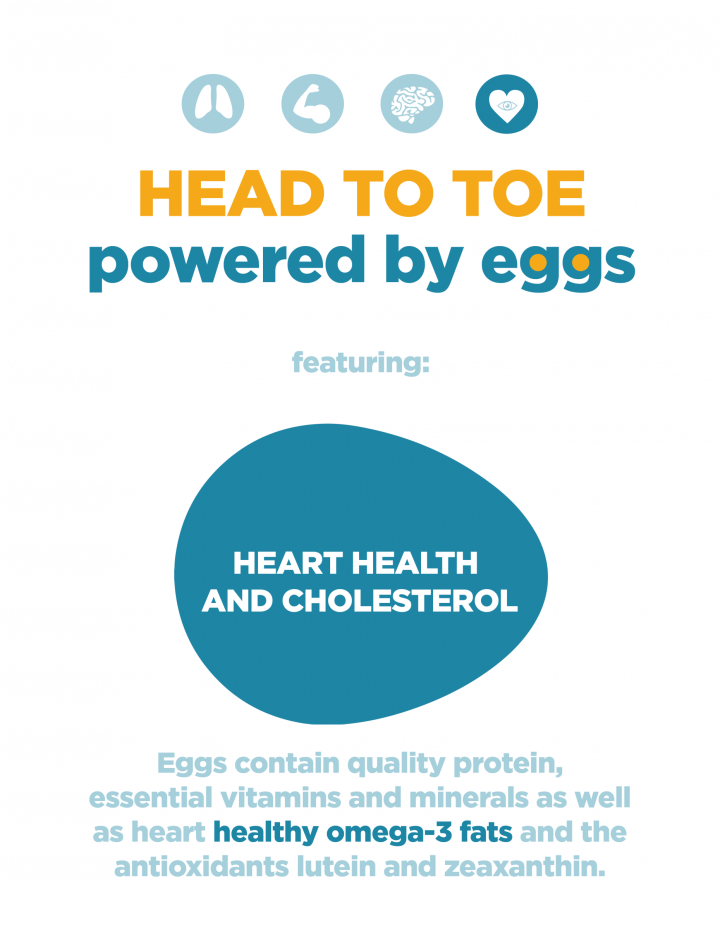
From head to toe, Australian Eggs are embarking on a journey to show you how to live your best life #PoweredByEggs. We'll be drawing from research and expert knowledge to demonstrate how holistic health outcomes are positively impacted by the inclusion of eggs in your diet.
From providing vitamin D for immunity and bone health, to having a post-workout meal that fuels muscle recovery and being part of a heart healthy diet - we want Australians to know that eating eggs is an important part of living a happy and healthy lifestyle.
| Required Nutrient | %DI / RDI per serving |
| Protein | 25% |
| Vitamin A | 14% |
| Vitamin D | 82% |
| Vitamin E | 20% |
| Riboflavin (vitamin B2) | 24% |
| Choline | 74% |
| Folate | 48% |
| Panthothenic acid (vitamin B5) | 23% |
| Vitamin B12 | 16% |
| Iron | 14% |
| Zinc | 9% |
| Phosphorous | 21% |
| Selenium | 42% |
| Iodine | 28% |
| Biotin | 18% |