What Are Cage Eggs?
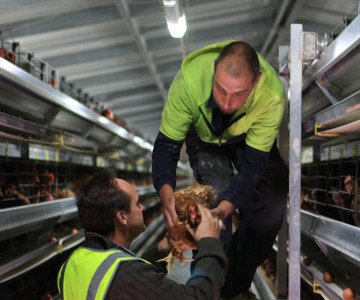
Cage eggs make up 40 percent of supermarket egg purchases in Australia. Cage eggs are produced from hens that are housed in cages inside large, climate-controlled sheds.
This site requires you to update your browser. Your browsing experience may be affected by not having the most up to date version.
Please visit browser-update.org to upgrade.
JavaScript has been disabled in your browser. Please enable JavaScript to experience the full functionality of our website.
Demand for free range eggs has grown significantly in Australia over the last 15 years and egg farmers have responded by investing in increased free range egg farming capacity. Free range is now the most popular egg category at the supermarket, making up 47 percent of total retail sales.

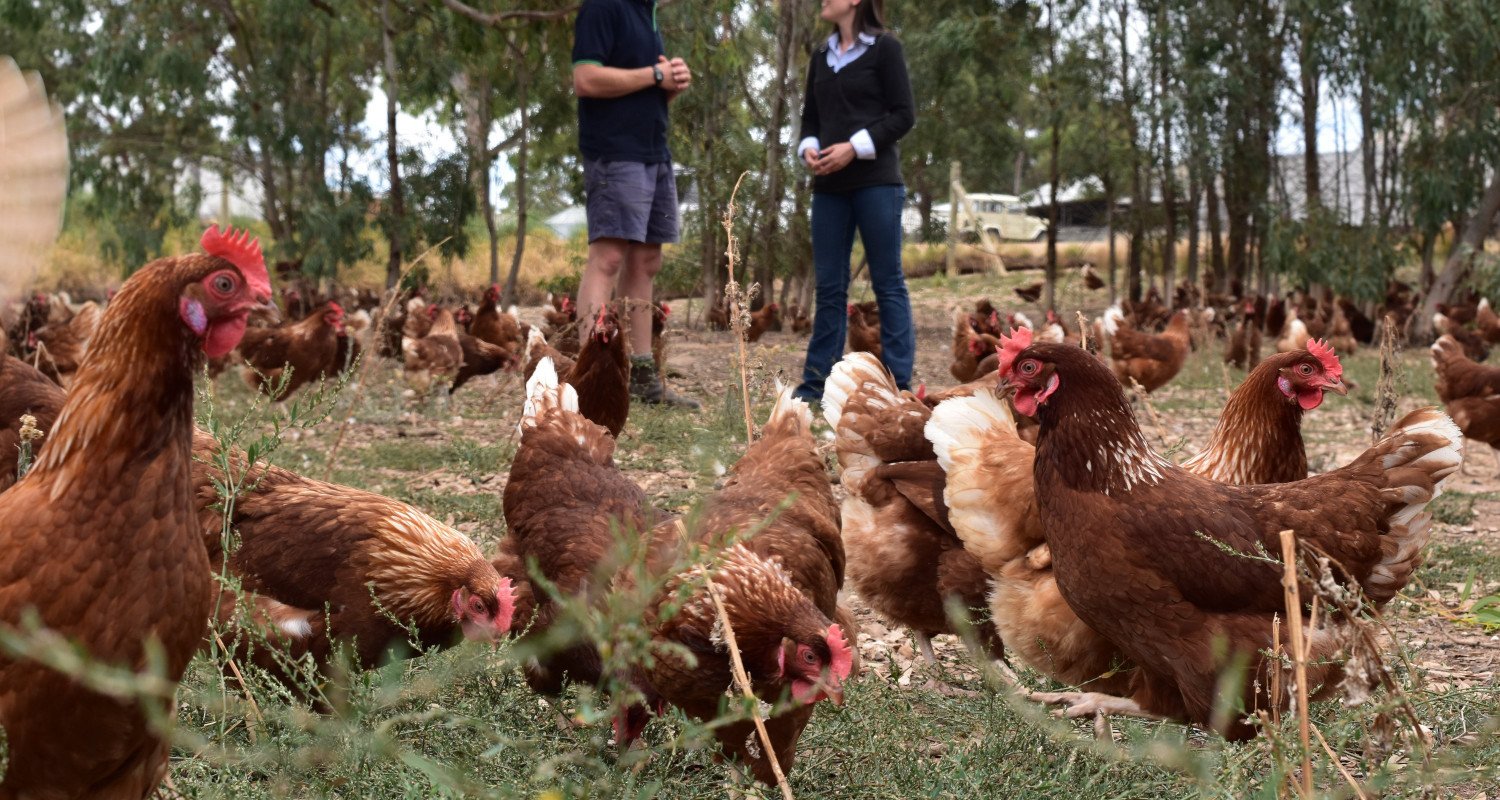
Free range eggs come from hens that have access to an outdoor range during the day but are housed securely and comfortably in sheds at night.
To be classified as a free range egg farm, the hens must have meaningful and regular access to an outdoor range during daylight hours. Farmers facilitate this by opening up doors to the sheds (called pop holes) every morning and closing them up in the late afternoon when the hens are back inside.
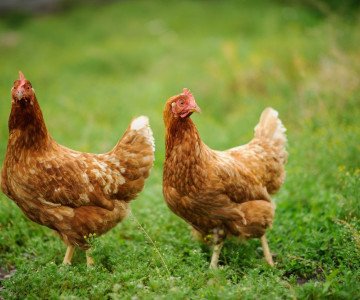
If free range hens lived outside 24/7 they would be completely exposed to the elements, have a harder time laying, and be easy prey for predators like foxes and hawks. So free range hens can use a secure outdoor range area to scratch the grass and move among the trees during the day, while still having the safety of a shed at night.
Unlike in many other areas of the world, Australia’s arid climate means we can operate free range systems for 12 months of the year. Only in extreme weather such as a heatwave or flood would a farmer consider not opening the doors to let the hens outside.
It would be impossible to collect all the eggs if the hens laid them outside so free range sheds have specially fitted nest boxes where hens go to lay an egg each day. A gentle tilt in every box allows the eggs to roll onto a conveyor belt and be carried out of the shed automatically.
Want to see a free range egg farm for yourself? Australian Eggs invites you to take an inside look at a free range egg farm in the video below.
Terminology such as cage free, barn-laid and free range can often confuse consumers.
Cage free and barn-laid eggs are the same thing and in this farming system the hens live entirely within an indoor barn environment - but not in cages. Unlike free range, cage free hens don’t have the opportunity to go outside.
Cage free and free range systems have several similarities. Most notably, both systems provide indoor floor-based housing systems equipped with nest boxes, perches, and automatic feeding and watering systems. Hens in cage free and free range systems can move about freely within the shed.
Each production system comes with its own benefits and downsides and in each system farmers work hard to maximise the health and welfare of the hens.

Federal legislation defining what constitutes free range egg farming came into effect in early 2018. Under the law, eggs labelled as ‘free range’ must come from hens that are able to roam and forage outdoors for at least eight hours each day.
The maximum outdoor stocking density for free range egg farming is 10,000 hens per hectare of land or one hen per square metre. Each egg farm must state its outdoor stocking density on egg cartons.
Importantly, free range hens are free to choose when to go outside and how long to stay there. Some hens will go outside each day as soon as the doors open and stay there all day. Other hens will prefer to stay inside on a particular day to feel safe and secure and be closer to feed and water.
Each system of egg production from cage to free range has its own advantages and disadvantages and each performs differently against different criteria.
In terms of egg quality, all hens are fed a very similar grain-based diet which means all eggs have pretty much the same nutritional profile. Although free range hens are able to go outside and scratch around in the grass, they still get almost all their energy needs from feed inside the shed.
While free range hens might eat the odd insect or some grass seeds, this has no discernible impact on the nutritional profile of the eggs they lay.
Free range hens enjoy a range of advantages and experience some disadvantages, including:
| Advantages | Disadvantages |
| Access to an outdoor range and the ability to roam freely. | Greater exposure to predators such as foxes and eagles. |
| The opportunity to interact socially with more hens due to larger group sizes. | Harder biosecurity control for farmers because of exposure to outside pathogens. |
| The ability to practise a range of natural behaviours, including nesting, foraging for food, perching, and dust bathing. | An increased likelihood of feather pecking, infighting, social stresses, and cannibalism. |
| Better bone strength because of greater movement and activity. | A greater occurrence of manure-borne diseases and parasites. |
Increased need for antibiotics to treat sick hens. |
After researching egg farming in Australia, you may like to see a farm for yourself. Australian Eggs invites you to take a virtual tour of a free range egg farm below. In this 360º video, you can click, drag and move your phone to look around different parts of the free range facility.
Looking for more? Take a full virtual tour of three different egg farms here. In the 360º tour you can go inside a shed, compare barn-laid, free range and cage, and see the quality control that goes into egg collection, washing, grading and packing.
Australian Eggs is dedicated to bringing you everything you need to know about egg production in Australia. Learn more about egg farming or find out about cage eggs and barn laid eggs today.
To be classified as a free range egg farm, the hens must have meaningful and regular access to an outdoor range during daylight hours. Farmers facilitate this by opening up doors to the sheds (called pop holes) every morning and closing them up in the late afternoon when the hens are back inside.
Cage free and barn-laid eggs are the same thing and in this farming system the hens live entirely within an indoor barn environment - but not in cages. Unlike free range, cage free hens don’t have the opportunity to go outside.
In terms of egg quality, all hens are fed a very similar grain-based diet which means all eggs have pretty much the same nutritional profile. Although free range hens are able to go outside and scratch around in the grass, they still get almost all their energy needs from feed inside the shed.
Cage eggs make up 40 percent of supermarket egg purchases in Australia. Cage eggs are produced from hens that are housed in cages inside large, climate-controlled sheds.
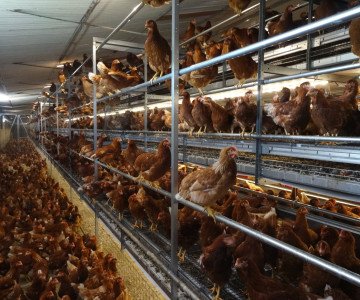
Barn-laid eggs, sometimes also called cage-free eggs, are produced in a farming system that allows the hens to wander freely within a shed. Barn-laid eggs make up 10 percent of supermarket egg purchases in Australia.
On organic egg farms, farmers cannot spray chemicals on the outdoor range and the hens must be fed grain that was grown without pesticides, herbicides or synthetic fertilisers. What Are Organic Eggs?