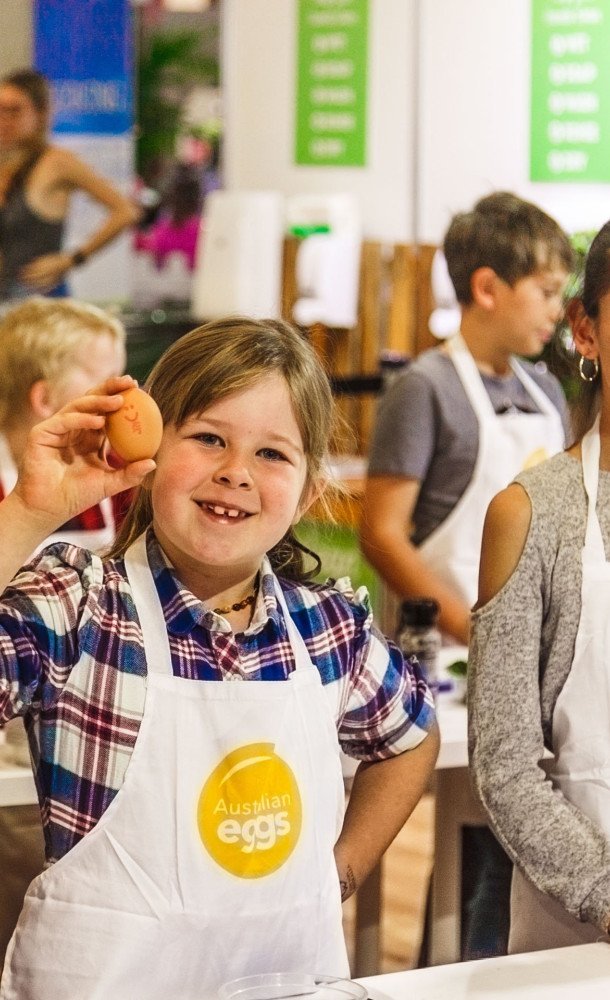

There's no fixed number of eggs recommended weekly for children in Australia. Rather, the Australian Dietary Guidelines include eggs within the broader "lean meat and alternatives" food group, with recommended servings ranging from about one serve a day for toddlers up to two and a half serves a day for older children and teens. Two eggs count as one standard serve.
Egg Guidelines by Age
Infants (6-12 months)
A well-cooked whole egg can be introduced once your baby starts solid foods, usually around 6 months and not before 4 months. The updated 2026 Australasian Society for Clinical Immunology and Allergy (ASCIA) guideline actually recommends introducing egg (and peanut) soon after starting solids, rather than waiting, since earlier introduction is linked to a lower risk of developing an egg allergy. Once introduced, keep offering egg at least once a week to help maintain tolerance. Serve it well-cooked and in a form suited to your baby's stage, like mashed or soft-scrambled - never raw or runny at this age.
Toddlers (1-3 years)
Toddlers aged 1-2 years are recommended around 1 to 1.5 serves a day from the lean meat and alternatives group, rising to about 1.5 serves for 2-3 year olds. Eggs can make up all or part of this, alongside other options like meat, fish or legumes. Children in this age group need around 14g of protein a day, and a single egg provides just over 6g, so eggs are a genuinely useful contributor. Cook eggs thoroughly and cut into appropriate sizes to manage choking risk.
Children (4-8 years)
The recommended intake from the lean meat and alternatives group is around 1.5 serves per day for this age group. Protein needs increase to around 20g a day, and a single egg still contributes a meaningful third of that. Eggs remain a flexible, affordable option alongside other protein-rich foods in this group.
Older children & teens (9-18 years)
Recommended intake rises to around 2.5 serves a day from the lean meat and alternatives group for this age range, reflecting increased growth and energy needs. Eggs remain a good option here too, and can be a useful high-protein breakfast choice that helps keep kids full through a busy school day.
Why Eggs Are Good for Growing Kids
Eggs contain choline, iodine, iron, omega-3 fats, vitamin D and folate - nutrients that all contribute to healthy brain development, alongside quality protein, healthy fats and antioxidants that support growth more broadly.
Introducing Eggs to Babies & Allergy Prevention
While eggs can be a potential food allergen for young children, delaying introduction isn't the answer. Current guidance recommends introducing well-cooked whole egg soon after your baby starts solids, rather than waiting until 12 months as older advice used to suggest.
Only introduce one new allergenic food at a time, so it's easier to identify what caused any reaction. A mild rash around the mouth after eating isn't necessarily a sign of allergy - it can just be skin contact irritation, and it's fine to keep offering the food. If you notice hives, swelling, vomiting or breathing difficulties, seek medical advice and speak to your GP about next steps before continuing.
Raw egg allergy affects around 8.9% of children at 12 months old, but of these, roughly 80% can still tolerate baked or well-cooked egg. Most children outgrow egg allergy between 2 and 4 years of age, and by age 4, only around 1.2% remain allergic.
Egg Allergy vs Egg Intolerance
An egg allergy involves the immune system and can cause reactions like hives, swelling or, in rare cases, more serious symptoms. An intolerance is generally milder and involves digestive discomfort rather than an immune reaction. If you suspect either, it's worth getting a proper diagnosis from a GP or allergist rather than removing eggs from your child's diet unnecessarily.
Frequently Asked Questions
How many eggs can a child eat in a week?
There's no specific weekly number. The Australian Dietary Guidelines include eggs within the broader lean meat and alternatives food group, with recommended daily servings varying by age from about 1 serve for toddlers up to 2.5 serves for teens. Two eggs equal one standard serve.
Can babies eat eggs, and how much?
Yes. The current ASCIA guideline recommends introducing well-cooked whole egg soon after starting solids, around 6 months of age and not before 4 months, then continuing to offer it at least once a week to help maintain tolerance.
Is it safe for a child to eat an egg every day?
Yes, for healthy children with no egg allergy, eating an egg daily is generally considered fine as part of a varied diet, following the same food-group guidance used for the general population.
Do eggs cause allergies in children?
Eggs are a common food allergy for young children, but delaying introduction isn't recommended. Current guidance recommends introducing well-cooked egg early and, once it has been tolerated, continuing to include it regularly in a baby’s diet to help reduce the chance of egg allergy developing. Parents of children with eczema or existing food allergies should talk to their doctor before introducing egg.
How many eggs should a toddler (1-3 years) eat?
Toddlers are recommended around 1 to 1.5 serves a day from the lean meat and alternatives food group, of which eggs can make up all or part. Two eggs count as one standard serve.
Does my child need to limit eggs for cholesterol?
No. Current dietary guidance doesn't recommend limiting eggs for cholesterol reasons in healthy children, any more than it does for healthy adults. Eggs are relatively low in saturated fat, and saturated fat has a much greater effect on blood cholesterol than dietary cholesterol from eggs.
Is it safe for kids to eat raw or undercooked egg?
Children under 4, along with pregnant women, elderly people and anyone with a weakened immune system, should avoid raw or undercooked egg due to the small risk of Salmonella. Always cook eggs until the white and yolk are firm for kids.