Australian Eggs and Foodbank SA & NT Partnership
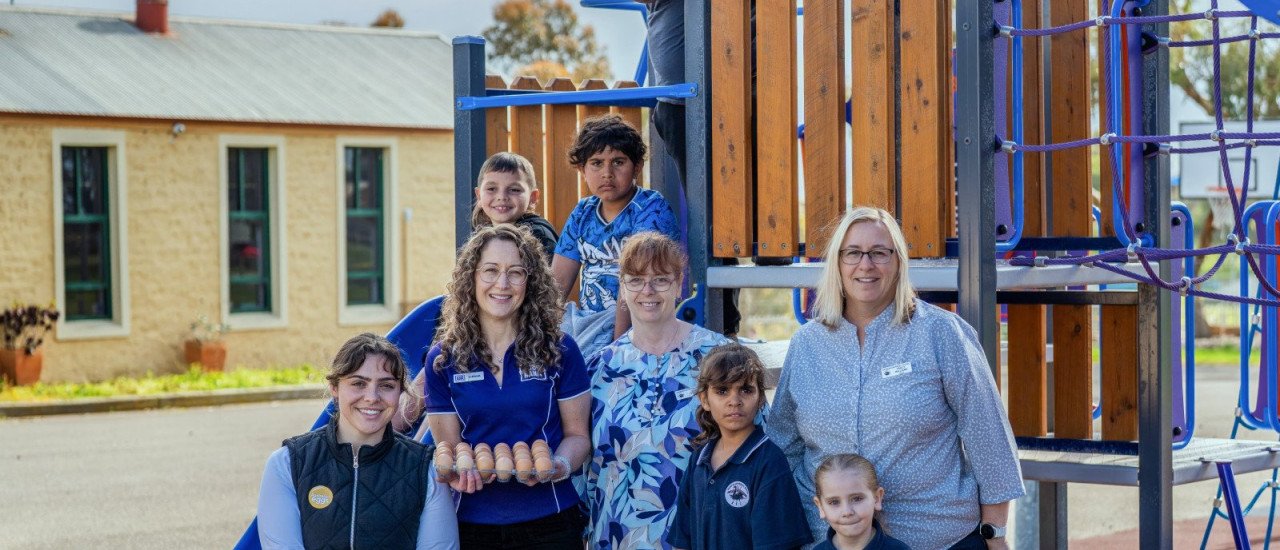

Eggs in remote First Nations schools and communities
Every day a large portion of the world's population relies on eggs as a source of nutrition. In Australia that equates to over 19 million eggs, all packed with 17 vitamins and nutrients and recommended for consumption for all stages of life.
Eggs are easier to access in some places than others and the further away from major centres, the greater the challenge can be for accessing fresh whole foods. This includes regional and remote areas where First Nations communities face a number of other disadvantages, including food insecurity.
To help address this challenge, Aus Eggs partnered with Foodbank to help deliver the Eggs for Community program. The program was aimed at getting eggs into regional and remote First Nations communities across South Australia and the Northern Territory.
The pilot version of this program was undertaken over a 6-month period in mid 2025, with some of the most remote Schools across the region receiving eggs and participating in the program. In addition, the support provided from Australian Eggs enabled Foodbank to provide eggs to First Nations communities via Foodbank Food Hubs.
By using Foodbank’s existing infrastructure, the partnership enabled eggs to be added to the menu in the school’s free breakfast programs and help provide a nutritious start to the day for kids in these communities.
Providing nutrition has intended education benefits as well. Providing food at schools strengthens engagement between local kids and their schools as well as increasing their ability to concentrate and learn when at school. By increasing access to eggs through the program, Aus Eggs hopes to support these communities to experience the health benefits and joy of eggs that many others take for granted.
So far, the Eggs for Community pilot has delivered more than 6,220 kilograms of eggs to 44 First Nations schools across NT and regional SA. Beyond providing important nutrition, this program has also been reported to have had a positive impact on school attendance and engagement.

Impact Report

Want to see what an egg farm looks like? Take this interactive 360 degree tour to see how eggs are produced in Australia.
