Food Safety


Food safety is a key issue for both consumers and egg farmers and is critical to maintaining confidence in eggs as a staple food.
Work to date has demonstrated that it is possible to minimise risks arising on-farm to a very low level and this work will continue through both research and communications activities.
There remains an even greater potential to assist in managing food safety risks arising in the post-farm egg value chain by continuing to facilitate dialogue between the egg industry, food safety regulators and end-users of eggs and egg products.
The positive health and nutritional benefits of eggs to humans will continue to be characterised and disseminated. By investing in RD&E we intend to reduce food safety issues, increase consumer confidence and consumption and enhance industry credibility.
Key Resources
Code of Practice for Shell egg production grading packing and distribution 2009
The Code aims to prevent contamination and deterioration in the quality of shell eggs and has been designed to cover different types of egg production systems from small free range farms to intensive cage systems.
Synopsis of Salmonella Response Plan
This synopsis is an adaptation of the Salmonella Incidence Response Plan, and is designed to provide a minimum standard for use by farmers if their farm is implicated in a foodborne outbreak.
SE Guide for Producers
Salmonella Enteritidis – A Guide for Producers


Current Research

Optimising calcium and phytase levels to enhance eggshell quality
This project focuses on improving eggshell quality and laying performance in Australian layer hens by fine tuning calcium and phytase nutrition during the pullet and late-lay phases. It will combine controlled research trials with largescale commercial validation to generate practical, industry relevant data.
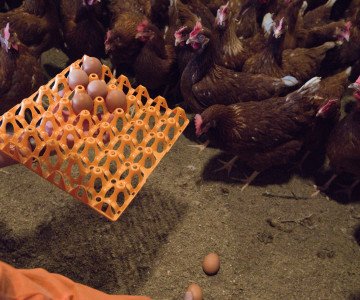
Floor eggs data analysis and trials
The conditions contributing to floor egg production are poorly understood. By identifying these conditions, targeted interventions can be used to minimise floor egg numbers, reducing the associated food safety and economic implications.
Completed Research
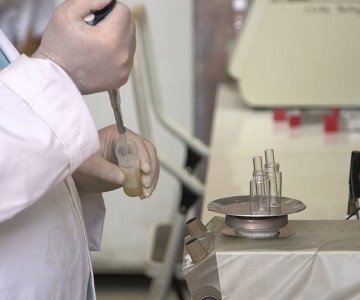
Evaluation of vaccination program options against Salmonella Enteritidis 7A in laying hens in Australia
This project tested three different vaccination programs for their efficacy in Salmonella Enteritidis (SE) prevention in laying hens. The results of this study indicated that SE control is possible using a combination of the current registered live Salmonella Typhimurium (ST) vaccines and an SE killed autogenous vaccine.
In Stage two of this project hens vaccinated with the ST + SE program were challenged 35 weeks after their second vaccination. Results indicated that vaccinated hens had a sustained humoral immune response, but were no less likely to be infected with SE long- term than non-vaccinated hens.Traceability Technology Desktop Review
To review current egg traceability systems and available technologies to support enhanced traceability in the Australian egg industry
Antimicrobial resistance surveillance in Salmonella isolates from environments on Australian commercial egg farms
This project was conducted to identify the most appropriate mechanisms for obtaining and performing antimicrobial susceptibility testing on Salmonella isolates obtained from Australian layer shed environments.

Salmonella Enteritidis Response Plan- An Approach to Salmonella Enteritidis Detection
This report provides a guideline for industry response in the event of a Salmonella Enteritidis outbreak.
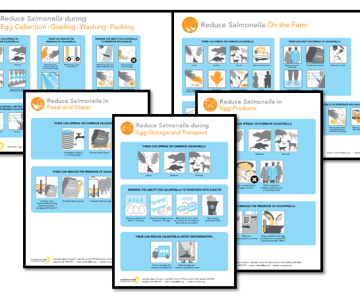
Through-Chain Salmonella Risk Identification
Effective response and management of salmonella challenges in the egg industry developed to defend the egg category, increase the strength of the egg brand and facilitate access to new markets.

Virulence of layer farm or egg associated Salmonella isolates
Improved understanding of the public health significance of Salmonella serovars and extent of invasiveness and virulence.

The Culinary Uses of Eggs
Effective response and management of salmonella challenges in the egg industry developed to defend the egg category, increase the strength of the egg brand and facilitate access to new markets.

Tolerance in raw egg allergy on consumption of cooked egg
Decreased prevalence of allergic sensitivity in infants through factual communication of scientific research findings.
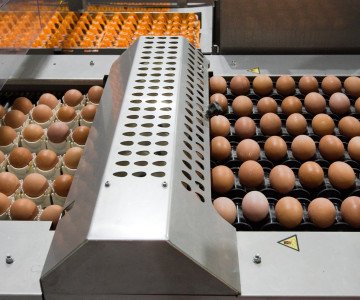
Salmonella control in layer chickens
Confidence in the ability to reduce any presence of Salmonella on shell eggs by the use of vaccine technology determined.

How and when to introduce eggs to avoid egg allergies
Optimal timing to introduce eggs into infant diets known thereby allaying fears of including eggs in infant diets
An Egg: Salmonella Quantitative Risk Assessment Model
A quantitative risk assessment of Salmonella contamination of eggs in
Australia, through the development of a tool to predict how changes in industry practices
may impact on the occurrence of Salmonellosis in humans.National Food Safety Risk Profile of Eggs and Egg Products
This report set out to identify the following; hazards that enter any point of the food chain for eggs and egg products, potential management strategies for the identified high risk hazards, and product/pathogen combinations in which further risk analysis might be required by risk managers.
Egg and Egg Shell Quality in the Australian Egg Industry
This project produced a booklet that provides guidelines on egg internal quality and egg shell quality for the Australian Egg Industry.Until the production of the booklet arising from this project, there has been no common standard against which producers and other industry personnel could compare egg quality.
Projects you might find interesting

Traceability for the egg industry
Robust traceability systems are critical to ensuring that in the event of egg quality and food safety issues, the correct farms, specific production areas or sheds can be efficiently identified, and steps taken to rectify concerns.

Salmonella Enteritidis Response Plan- An Approach to Salmonella Enteritidis Detection
This report provides a guideline for industry response in the event of a Salmonella Enteritidis outbreak.
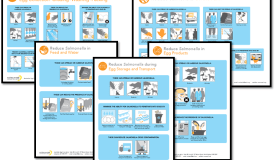
Through-Chain Salmonella Risk Identification
Effective response and management of salmonella challenges in the egg industry developed to defend the egg category, increase the strength of the egg brand and facilitate access to new markets.
Want to see what an egg farm looks like? Take this interactive 360 degree tour to see how eggs are produced in Australia.