Leading Research


To generate focused research, Australian Eggs works with industry to build a clearer understanding of the needs of farmers, identifies research groups with the skills to address the issues, and develops targeted research project ideas that have clear pathways to on-farm adoption.
Australian Eggs Open Call for Research Proposals
Australian Eggs announces our annual open call for research proposals in line with accompanying research priority areas. Through a process of consultation with industry stakeholders, Australian Eggs have identified 11 priority areas. We invite all interested researchers to submit a research proposal by 2 November 2026.
Please complete a Research Proposal Template and submit to [E-Mail not displayed].
Any questions relating to the process or the Research Proposal Template can be emailed to [E-Mail not displayed].
Latest Research Project
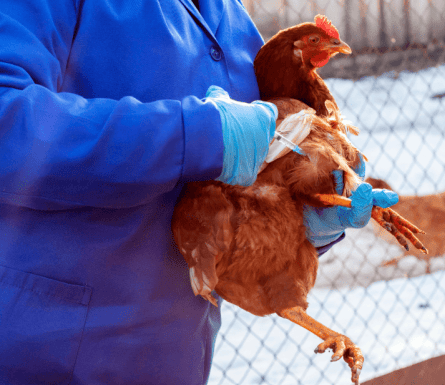
Development of single administration, slow release vaccine delivery system
This project aims to develop a single-shot, slow-release vaccine delivery system using hydrogel technology. It will investigate the best vaccine release pattern from hydrogel implants (extended “burst” verses multiple “pulses”) to induce immunity.
Filter by Category
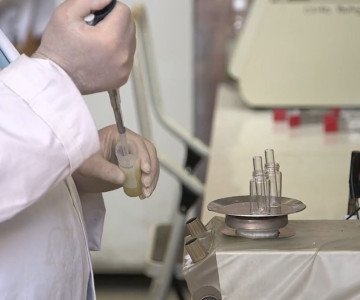
Detection of vvIBDV strains and Australian variants in poultry
This topic of this study is the very virulent infectious bursal disease virus (vvIBDV) and was carried out in order to develop a diagnostic test for potentially infected poultry.
Investigations into the management of the darkling beetle
The darkling beetle is capable of transmitting diseases between chickens.This study reports on previous investigations into the insecticide resistance of darkling beetles, and highlights the need for a control plan.
New Therapeutics for Poultry
The broad objective of this project was to assess the ability of ChIFN-γ to increase broiler growth performance, enhance vaccine efficacy and improve disease resistance.
Development of a live attenuated vaccine for chicken anaemia virus
The chicken anaemia virus is associated with increased mortality rates amongst chickens.This study makes considerable progress towards developing a defined attenuated vaccine against the virus.
Hindgut function in laying hens
This report details a series of experiments designed to provide evidence of a fermentative acidosis caused in the hindgut gut of layer-type birds after changes in their diet, and the development of a commercial feed enzyme.
Control of Intestinal Spirochaete Infections in Chickens
Infection of layer and broiler breeders with Avian Intestinal Spirochaetosis (AIS) has emerged as a widespread constraint to optimal production in both the egg and chicken meat industries in Australia.The micro-organisms involved are difficult to isolate and characterise, therefore diagnosis of AIS is often difficult.
Studies of Cloacal Haemorrhage, Vent Trauma and Beak Trimming in the Laying Hen
The long-term objective of this research program is to develop a world best practice to achieve peak egg production and to reduce mortalities to 2-3% in birds with intact beaks. .
Investigating Sanitation of Surface Water for Poultry using Chlorine-IBDV Models
Significant numbers of commercial poultry production sites in Australia rely on surface waters (dams, creeks and rivers) as their major source of drinking water.
Controlling Vent Trauma With Stockwound Sprays
Recent studies found that vent cannibalism was the biggest cause of loss in laying hens.Beak trimming, at two life stage intervals has been used as a means of controlling the problem.
Enhancing mucosal immunity in chickens
Infection in chickens caused by microbial pathogens at the intestinal surface can be a challenge for the Australian poultry industry.However, there are a number of novel vaccination strategies which can enhance antibody production and reduce the incidence of infection and ultimately improve flock health and performance.
Projects you might find interesting
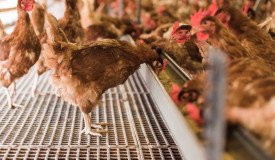
Alternative protein-rich ingredients for Australian pigs and laying hens
Feed cost accounts for 70% of the production costs in farming, and any strategy to reduce it will have a significant impact on total production costs and farm profitability.
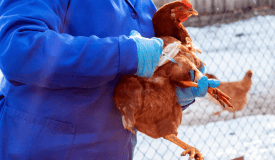
Development of single administration, slow release vaccine delivery system
This project aims to develop a single-shot, slow-release vaccine delivery system using hydrogel technology. It will investigate the best vaccine release pattern from hydrogel implants (extended “burst” verses multiple “pulses”) to induce immunity.
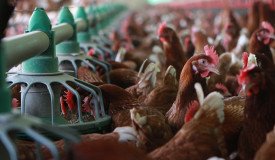
Practical strategies to increase individual layer hens feed efficiency
The overall findings of this study reveal that significant variation exists in the feed efficiency of layer hens. In this project, hens that put on more weight from the point of lay to mid-lay tended to be less feed efficient and have poorer quality eggs. The high feed efficient hens had better egg quality and were less prone to liver damage or fatty liver.
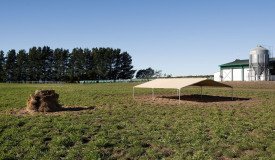
Review of rodent control for the Australian chicken meat and egg industries
This final report on current rodent control strategies employed by the Australian chicken meat and egg industries also includes a manual for producers on use of rodenticide products.
Want to see what an egg farm looks like? Take this interactive 360 degree tour to see how eggs are produced in Australia.
