Leading Research


To generate focused research, Australian Eggs works with industry to build a clearer understanding of the needs of farmers, identifies research groups with the skills to address the issues, and develops targeted research project ideas that have clear pathways to on-farm adoption.
Australian Eggs Open Call for Research Proposals
Australian Eggs announces our annual open call for research proposals in line with accompanying research priority areas. Through a process of consultation with industry stakeholders, Australian Eggs have identified 11 priority areas. We invite all interested researchers to submit a research proposal by 2 November 2026.
Please complete a Research Proposal Template and submit to [E-Mail not displayed].
Any questions relating to the process or the Research Proposal Template can be emailed to [E-Mail not displayed].
Latest Research Project
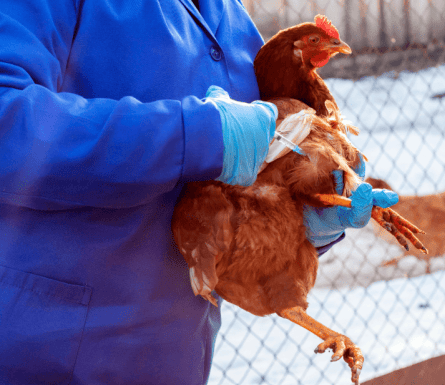
Development of single administration, slow release vaccine delivery system
This project aims to develop a single-shot, slow-release vaccine delivery system using hydrogel technology. It will investigate the best vaccine release pattern from hydrogel implants (extended “burst” verses multiple “pulses”) to induce immunity.
Filter by Category
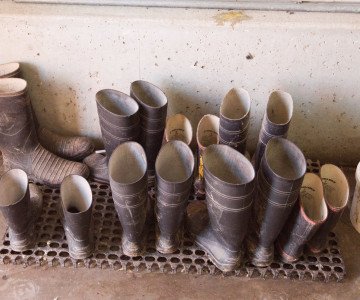
On-farm Biosecurity Risk Identification Framework for the Australian layer industry
This report provides a support tool for Australian egg producers to determine biosecurity risks on-farm. As well as assisting Egg producers in understanding what constitutes a risk and why, the report offers potential management strategies to decrease on-farm risks to biosecurity.

Opportunities to increase engagement of Australian egg producers with biosecurity practices
This project identified factors that influence adoption of biosecurity practices by Australian egg producers, and provides direction on initiatives that may help improve adoption across all sectors within the industry.

Separate feeding of calcium for poultry
This series of studies investigated the presence and extent of an ‘appetite’ for an extra-dietary source of Ca in laying hens and established the optimum Ca and P concentrations and ratios of dietary Ca for optimum egg production and nutrient digestibility.

Reducing ammonia losses during composting of chicken manure without altering economic outcomes
This research trialled mixing poultry manure with organic materials such as sawdust and wood chips, in an effort to produce a nitrogen rich compost product.
Addition of sawdust or wood chips to manure was shown to maximise nitrogen retention but at an increased compost production cost.
Effects of phasing out caged farming in Europe
This project investigated egg production in Germany, the Netherlands and the UK, where conventional cage systems for laying hens are no longer permitted. The report gives an overview of some of the systems and equipment in use; their set-up and cost, and flock management practices in place.
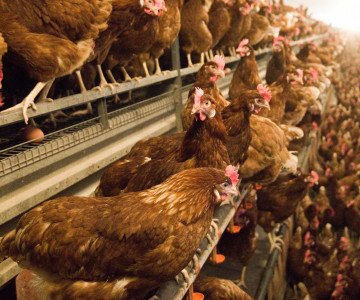
Egg Farming Systems Welfare Science Review
A scientific review of layer welfare research. The final report provides a summary of the advantages, disadvantages and issues of different egg production systems.
Clouds and Pasteurella multocida
The importance of genetic variation within a pathogen (the concept of a “cloud” as opposed to a single species or indeed a single clone) and their impact is well appreciated in poultry vaccines and poultry diseases.
Animal Welfare and Values
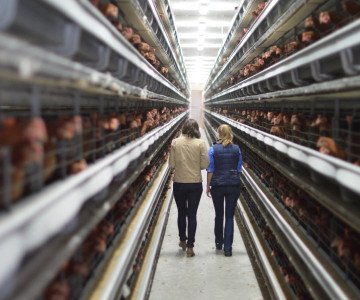
Australian Eggs engaged a panel of researchers, including animal welfare scientists, veterinary and social science experts to identify and describe values based elements that arise in the context of the available frameworks for animal welfare on egg farms.
Antimicrobial resistance surveillance in Salmonella isolates from environments on Australian commercial egg farms
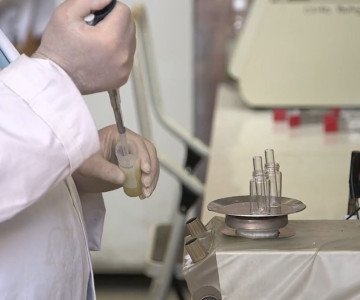
This project was conducted to identify the most appropriate mechanisms for obtaining and performing antimicrobial susceptibility testing on Salmonella isolates obtained from Australian layer shed environments.
Projects you might find interesting
Alternative protein-rich ingredients for Australian pigs and laying hens
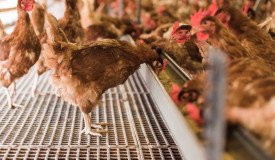
Feed cost accounts for 70% of the production costs in farming, and any strategy to reduce it will have a significant impact on total production costs and farm profitability.
Development of single administration, slow release vaccine delivery system
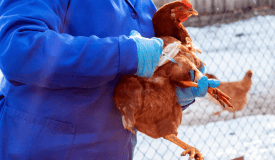
This project aims to develop a single-shot, slow-release vaccine delivery system using hydrogel technology. It will investigate the best vaccine release pattern from hydrogel implants (extended “burst” verses multiple “pulses”) to induce immunity.
Practical strategies to increase individual layer hens feed efficiency
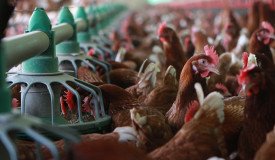
The overall findings of this study reveal that significant variation exists in the feed efficiency of layer hens. In this project, hens that put on more weight from the point of lay to mid-lay tended to be less feed efficient and have poorer quality eggs. The high feed efficient hens had better egg quality and were less prone to liver damage or fatty liver.
Review of rodent control for the Australian chicken meat and egg industries
This final report on current rodent control strategies employed by the Australian chicken meat and egg industries also includes a manual for producers on use of rodenticide products.
Want to see what an egg farm looks like? Take this interactive 360 degree tour to see how eggs are produced in Australia.
