Leading Research


To generate focused research, Australian Eggs works with industry to build a clearer understanding of the needs of farmers, identifies research groups with the skills to address the issues, and develops targeted research project ideas that have clear pathways to on-farm adoption.
Australian Eggs Open Call for Research Proposals
Australian Eggs announces our annual open call for research proposals in line with accompanying research priority areas. Through a process of consultation with industry stakeholders, Australian Eggs have identified 11 priority areas. We invite all interested researchers to submit a research proposal by 2 November 2026.
Please complete a Research Proposal Template and submit to [E-Mail not displayed].
Any questions relating to the process or the Research Proposal Template can be emailed to [E-Mail not displayed].
Latest Research Project
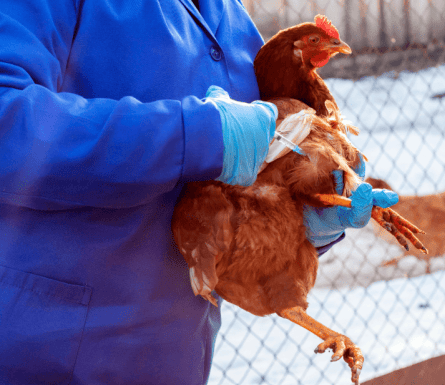
Development of single administration, slow release vaccine delivery system
This project aims to develop a single-shot, slow-release vaccine delivery system using hydrogel technology. It will investigate the best vaccine release pattern from hydrogel implants (extended “burst” verses multiple “pulses”) to induce immunity.
Filter by Category
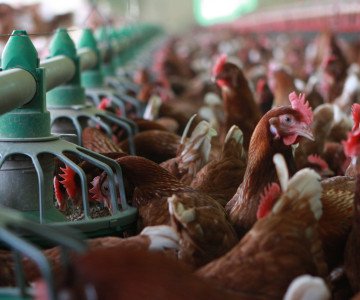
Sustainable feed to optimise layers’ productive life
This is a highly beneficial project which will reduce the carbon footprint, reduce feed cost, and promote layer life. This will be done by replacing soybean meal (SBM) with combination of canola meal (CM) and insect meal (BSFL: black soldier fly larvae).

Carbon calculator tool for the egg industry
Australian Eggs has produced a spreadsheet-based calculator which enables farmers to input data to determine their carbon footprint and total on-farm emissions.
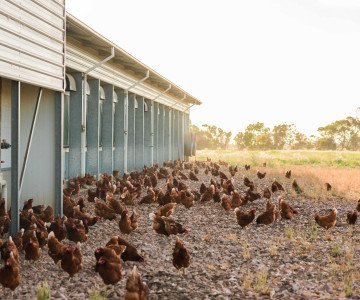
Determining manure deposition in free range sheds and free range areas
This project was conducted to assist free range egg producers with the management of manure nutrients to minimise the risk of environmental impact.
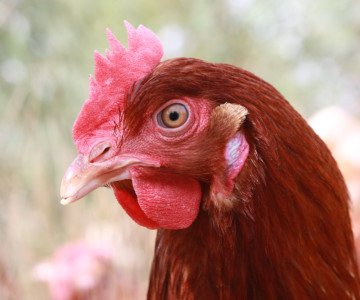
Automated, real-time monitoring of bird and flock movement and behaviour – Phase 2
Automated video-based systems utilised computer vision and machine learning to identify individual bird behaviours that help determine whole flock movements and behaviours, while providing real-time information on the proportion of hens eating, drinking, laying eggs etc.

Layer specific NIR calibration for predicting apparent metabolizable energy (AME) of grains
This project aimed to improve the accuracy of Near Infrared Reflectance (NIR) calibrations for predicting the apparent metabolisable energy (AME) of cereal grains for laying hens. Conducted between July 2022 and May 2025, the study measured AME values of 72 Australian-grown wheat, barley, triticale, sorghum, and maize samples.
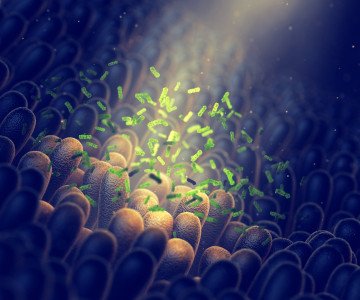
Gut Decisions: Effect of eggs on microbiome and cognition
Research by the University of Melbourne, commissioned by Australian Eggs, investigated the effects of regular egg consumption on human gut health and cognitive function, with a focus on how eggs may affect the link between our digestive system and our brain known as the “gut-brain axis”.
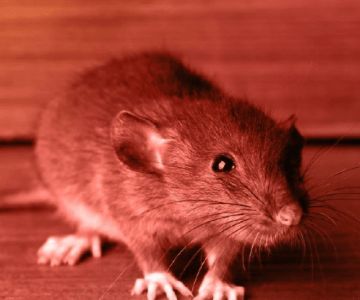
Investigating improved rodent control strategies
This project investigated alternative rodent control strategies for egg farms beyond traditional anticoagulant rodenticides. The project addressed concerns from recent mouse plagues and overreliance on chemical controls, which raise resistance, secondary poisoning, and residue risks.

Genetic restoration to protect Australian poultry against Avian Influenza
The initial stage of research found the key in chicken genetics that is responsible for high pathogenic avian influenza virus. This project builds on this important finding, by testing the most appropriate and effective intervention to prevent low pathogenic avian influenza progressing to high pathogenic avian influenza.
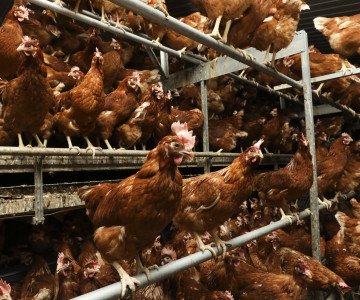
Investigations of upper respiratory tract infections (URTI)
This research project investigated upper respiratory tract infections (URTIs) in layer farms. URTIs cost the egg industry $35 million annually through reduced production, medication, vaccination, and mortality.
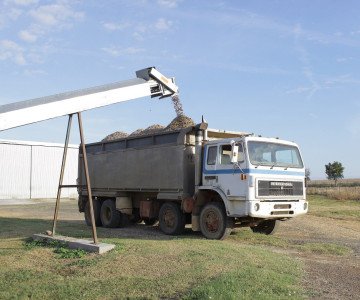
Optimising waste and by-product utilisation and conversion to value streams
This project quantified the volume of waste and by-products produced by the egg industry, and reported total nutrients contained in the by-products. In addition, a manual outlining viable strategies for by-product and waste management and utilisation was produced.
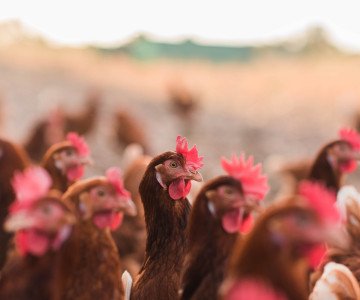
Phenotypic and genotypic profiles of hens that pile
This project provided information to reduce piling and smothering through short- and long-term strategies, which improved productivity and bird welfare. The project led by University of Melbourne and in partnership with University of Bern and a major breeding company, is part of a larger international project “HenTrack”.

Eggs to improve choline intakes in young Australian children
Recent study has shown that Choline, readily available in eggs, is an essential nutrient required during pregnancy and the first two years of life. Insufficient choline intake during pregnancy and early life are associated with a lower IQ in the child.

Ensuring egg safety: review of microbial control in the supply chain
This scope of this project is to determine if various lower storage temperatures will mitigate the
growth of Salmonella Enteritis and Salmonella Typhimurium. The work will involve literature
review, use of specific scientific databases, and collaboration with scientists to ensure accurate
information is gathered.
Extension and communication strategies to improve biosecurity
This project will develop the most appropriate and applicable biosecurity extension and communications strategies that will target small, medium and large segments of the egg industry.
Optimising reduced-protein diets for an efficient and sustainable layer production
Research by the University of New England, funded by Australian Eggs, explored how to improve reduced protein diets for laying hens. The aim was to make egg production more cost-effective and environmentally friendly. Despite decades of research, challenges remain in optimising reduced-protein diets.
Projects you might find interesting
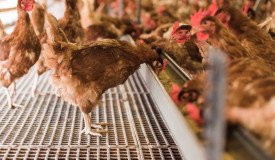
Alternative protein-rich ingredients for Australian pigs and laying hens
Feed cost accounts for 70% of the production costs in farming, and any strategy to reduce it will have a significant impact on total production costs and farm profitability.
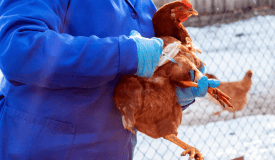
Development of single administration, slow release vaccine delivery system
This project aims to develop a single-shot, slow-release vaccine delivery system using hydrogel technology. It will investigate the best vaccine release pattern from hydrogel implants (extended “burst” verses multiple “pulses”) to induce immunity.
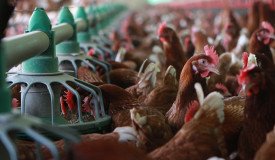
Practical strategies to increase individual layer hens feed efficiency
The overall findings of this study reveal that significant variation exists in the feed efficiency of layer hens. In this project, hens that put on more weight from the point of lay to mid-lay tended to be less feed efficient and have poorer quality eggs. The high feed efficient hens had better egg quality and were less prone to liver damage or fatty liver.
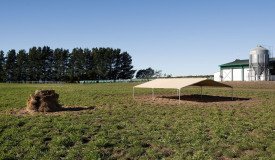
Review of rodent control for the Australian chicken meat and egg industries
This final report on current rodent control strategies employed by the Australian chicken meat and egg industries also includes a manual for producers on use of rodenticide products.
Want to see what an egg farm looks like? Take this interactive 360 degree tour to see how eggs are produced in Australia.
