Leading Research


To generate focused research, Australian Eggs works with industry to build a clearer understanding of the needs of farmers, identifies research groups with the skills to address the issues, and develops targeted research project ideas that have clear pathways to on-farm adoption.
Australian Eggs Open Call for Research Proposals
Australian Eggs announces our annual open call for research proposals in line with accompanying research priority areas. Through a process of consultation with industry stakeholders, Australian Eggs have identified 11 priority areas. We invite all interested researchers to submit a research proposal by 2 November 2026.
Please complete a Research Proposal Template and submit to [E-Mail not displayed].
Any questions relating to the process or the Research Proposal Template can be emailed to [E-Mail not displayed].
Latest Research Project
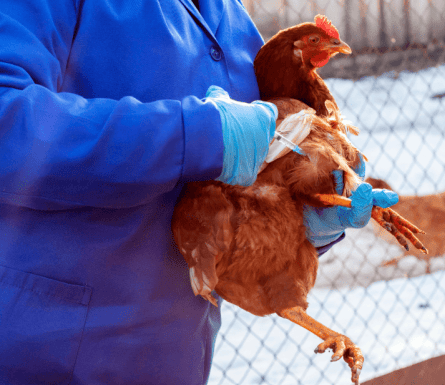
Development of single administration, slow release vaccine delivery system
This project aims to develop a single-shot, slow-release vaccine delivery system using hydrogel technology. It will investigate the best vaccine release pattern from hydrogel implants (extended “burst” verses multiple “pulses”) to induce immunity.
Filter by Category
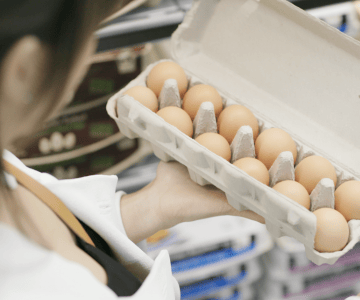
Quantifying the amount and bioavailability of iron in eggs
The quantity and bioavailability of iron (Fe) in eggs have been subject to ongoing debate. This study aimed to accurately quantify and characterise Fe speciation (including haem and non-haem Fe) in egg yolk, albumen and whole eggs, in both raw and cooked eggs.

Layer specific NIR calibration for predicting apparent metabolizable energy (AME) of grains
This project aimed to improve the accuracy of Near Infrared Reflectance (NIR) calibrations for predicting the apparent metabolisable energy (AME) of cereal grains for laying hens. Conducted between July 2022 and May 2025, the study measured AME values of 72 Australian-grown wheat, barley, triticale, sorghum, and maize samples.
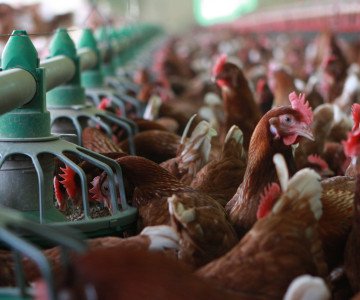
Optimising reduced-protein diets for an efficient and sustainable layer production
Research by the University of New England, funded by Australian Eggs, explored how to improve reduced protein diets for laying hens. The aim was to make egg production more cost-effective and environmentally friendly. Despite decades of research, challenges remain in optimising reduced-protein diets.
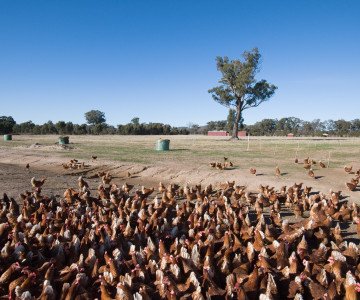
Nutritional management of free range laying hens
Building on previous research, this project further investigated the preferences of individual hens to use the range. Using RFID technology, this project indicated that there are linkages between a hen's preference to use the range and health and performance throughout life.
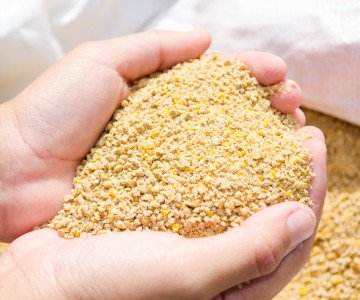
The economics of layer diet amino acid levels throughout lay
With feed costs high and egg prices volatile, its important to explore alternate ways of maximising profits, which may mean challenging traditional production practices. Although formulating a layer diet which meets nutritional requirements at the lowest possible cost seems to make sense, there are alternative ways of formulating diets which can lead to greater profits.
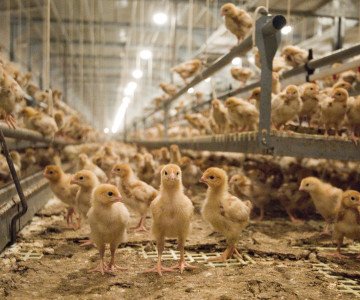
Managing pullets for extended layer life, improved productivity and shell quality
This project conducted by The University of Sydney explored strategies to extend the productive life of layer hens to 100 weeks while maintaining egg quality and flock health.
Barriers to the implementation of Max- profit and Stochastic models to industry
This research found that more resources and education may be needed to help nutritionists implement Stochastic and Max- profit feed formulation in the Australian layer industry.
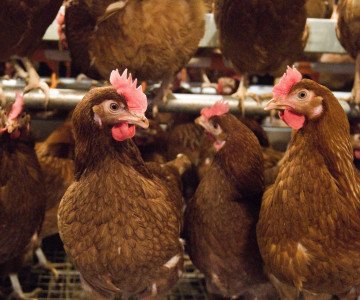
Nutritional strategies for managing pullets and improving late lay egg quality
This project indicated that feeding pullets a high nutrient density diet during rearing improved late lay eggshell quality. Lighter pullets, fed a high nutrient density diet in rearing had a lifelong better FCR, compared to heavier pullets.

Separate feeding of calcium for poultry
This series of studies investigated the presence and extent of an ‘appetite’ for an extra-dietary source of Ca in laying hens and established the optimum Ca and P concentrations and ratios of dietary Ca for optimum egg production and nutrient digestibility.
Pullet and layer flock uniformity: an epidemiological industry-based approach to improve feed efficiency
Benchmarking of flock uniformity and performance regarding persistency and longevity of lay achieved

Available phosphorus requirement of laying hens
Two experiments were conducted to determine the available phosphorus (AP) requirement of laying hens and to examine the effect of different dietary AP and calcium (Ca) concentrations on egg production and egg shell quality from the start of lay to 80 weeks of age.

Reducing the use of animal by-product meals in layer diets
Economic constraints and public concerns have compelled the poultry industry to increasingly use a range of cheaper, alternative plant-derived feedstuffs in feed formulations and eliminate the use of animal by-product meals.
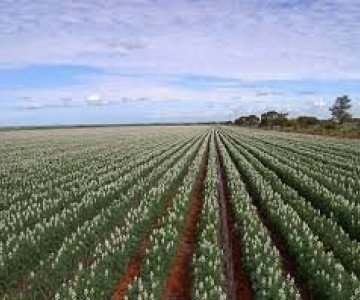
Legumes for poultry: Improvement of lupins and lathyrus for broilers and egg layers by enzyme treatment
This research is aimed at making locally-produced legumes, lupins and lathyrus, acceptable substitutes for expensive imports such as soybean meal or animal-protein meals for inclusion in poultry diets.
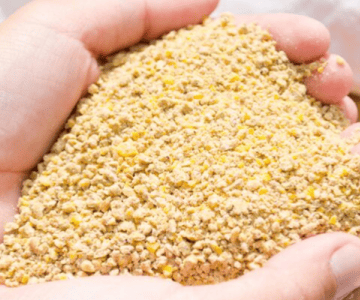
Energy requirements of imported layer strains
This study aims to determine the required energy intake of layer hen strain in terms of dietary energy concentration, feed intake, egg output, body weight and body fat content, in order to design diets that are nutrition and cost effective.
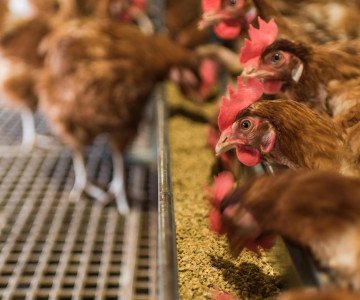
Inflammatory response to diet in the hindgut of layers
The aim of the project was to investigate the effects of diet change over the short and long term in chickens, to determine whether this caused an inflammation of the hindgut tissues. .
Projects you might find interesting
Alternative protein-rich ingredients for Australian pigs and laying hens
Feed cost accounts for 70% of the production costs in farming, and any strategy to reduce it will have a significant impact on total production costs and farm profitability.
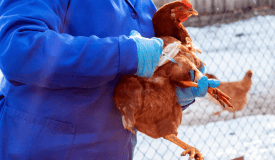
Development of single administration, slow release vaccine delivery system
This project aims to develop a single-shot, slow-release vaccine delivery system using hydrogel technology. It will investigate the best vaccine release pattern from hydrogel implants (extended “burst” verses multiple “pulses”) to induce immunity.
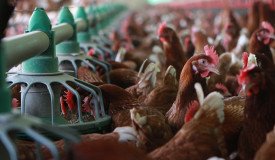
Practical strategies to increase individual layer hens feed efficiency
The overall findings of this study reveal that significant variation exists in the feed efficiency of layer hens. In this project, hens that put on more weight from the point of lay to mid-lay tended to be less feed efficient and have poorer quality eggs. The high feed efficient hens had better egg quality and were less prone to liver damage or fatty liver.
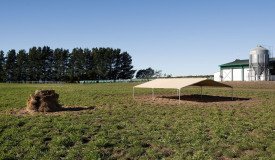
Review of rodent control for the Australian chicken meat and egg industries
This final report on current rodent control strategies employed by the Australian chicken meat and egg industries also includes a manual for producers on use of rodenticide products.
Want to see what an egg farm looks like? Take this interactive 360 degree tour to see how eggs are produced in Australia.
