Leading Research


To generate focused research, Australian Eggs works with industry to build a clearer understanding of the needs of farmers, identifies research groups with the skills to address the issues, and develops targeted research project ideas that have clear pathways to on-farm adoption.
Australian Eggs Open Call for Research Proposals
Australian Eggs announces our annual open call for research proposals in line with accompanying research priority areas. Through a process of consultation with industry stakeholders, Australian Eggs have identified 11 priority areas. We invite all interested researchers to submit a research proposal by 2 November 2026.
Please complete a Research Proposal Template and submit to [E-Mail not displayed].
Any questions relating to the process or the Research Proposal Template can be emailed to [E-Mail not displayed].
Latest Research Project
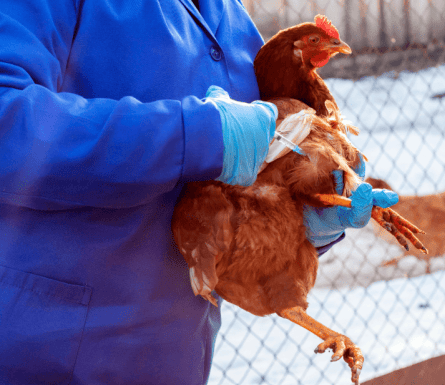
Development of single administration, slow release vaccine delivery system
This project aims to develop a single-shot, slow-release vaccine delivery system using hydrogel technology. It will investigate the best vaccine release pattern from hydrogel implants (extended “burst” verses multiple “pulses”) to induce immunity.
Filter by Category
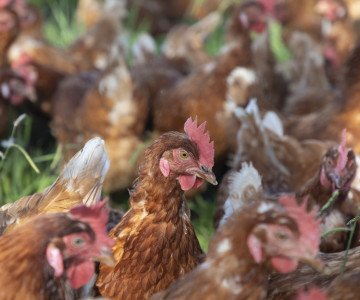
Birds pile-up detection and smothering prevention system on commercial farms
This project builds on the outcomes of previous Australian Eggs research projects which developed the algorithms to identify flock behaviour, including bird piling. Using this artificial intelligence (AI) technology, a bird piling detection system will be designed to alert egg farmers, in real time, when a piling event commences.
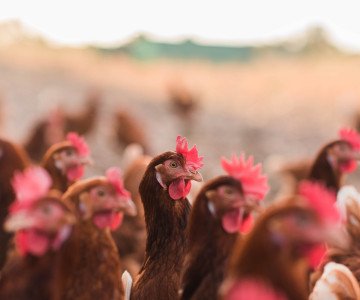
Phenotypic and genotypic profiles of hens that pile
This project provided information to reduce piling and smothering through short- and long-term strategies, which improved productivity and bird welfare. The project led by University of Melbourne and in partnership with University of Bern and a major breeding company, is part of a larger international project “HenTrack”.
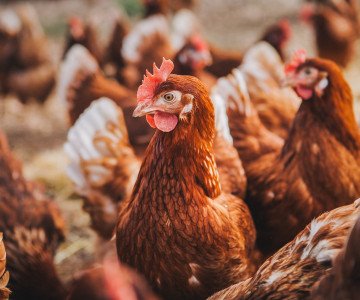
Monitoring hen health with machine vision on free range farms
This project will develop a proof-of-concept machine vision system with the capability to detect abnormal flock appearance and behaviour, that would indicate poor animal health or welfare.
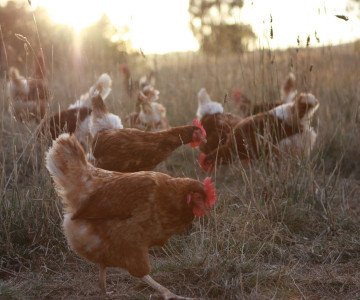
Values in layer hen welfare 2.0: The application of community values to key layer hen welfare issues
Following on from the Australian Eggs Animal Welfare and Values project, completed in June 2019, this project sought to expand understanding of animal welfare by exploring how the community applies values to key welfare issues using social science research methods.
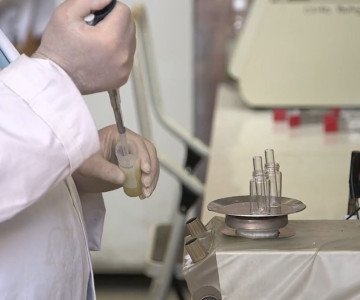
Non-invasive technology for gender determination of fertilised chicken eggs
Researchers used an optical technique to develop a device that can automatically determine the gender of chicken eggs.
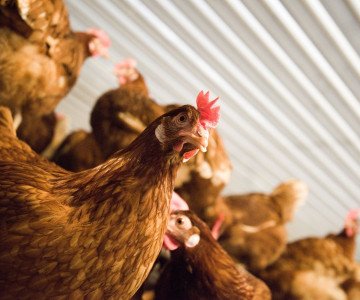
Automated, real-time monitoring of bird and flock movement and behaviour - Phase 1
This proof of concept research developed an automated intelligence, video-based system which recognises individual birds within the shed and their activities in real-time.
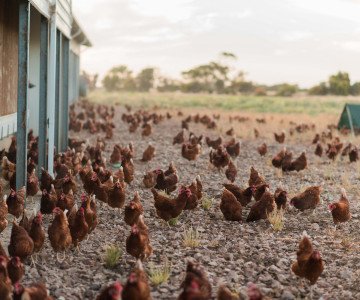
Hen ranging behaviour in relation to light and UV intensity
This project found that free range hens will avoid times of peak sun intensity and thus may not range as much during the summer months.
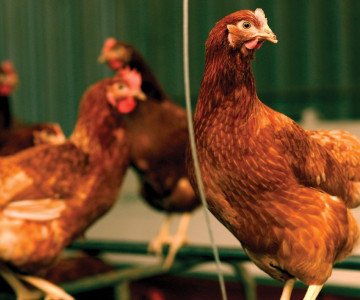
What causes smothering in commercial free-range laying hens?
A project to identify factors associated with smothering.
Practical strategies to measure hen welfare
This project developed a method to detect positive and negative affective states in layer flocks through blood and egg samples.

Effects of phasing out caged farming in Europe
This project investigated egg production in Germany, the Netherlands and the UK, where conventional cage systems for laying hens are no longer permitted. The report gives an overview of some of the systems and equipment in use; their set-up and cost, and flock management practices in place.
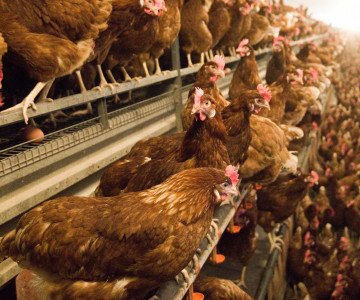
Egg Farming Systems Welfare Science Review
A scientific review of layer welfare research. The final report provides a summary of the advantages, disadvantages and issues of different egg production systems.
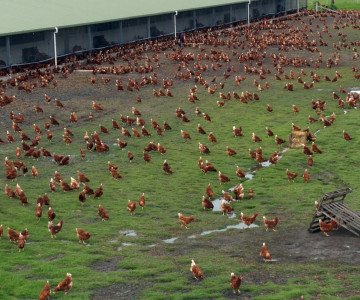
Clouds and Pasteurella multocida
The importance of genetic variation within a pathogen (the concept of a “cloud” as opposed to a single species or indeed a single clone) and their impact is well appreciated in poultry vaccines and poultry diseases.
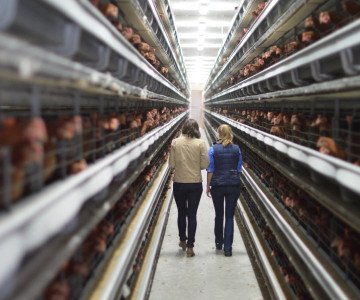
Animal Welfare and Values
Australian Eggs engaged a panel of researchers, including animal welfare scientists, veterinary and social science experts to identify and describe values based elements that arise in the context of the available frameworks for animal welfare on egg farms.
Best Practice Lighting Management for Australian Layers
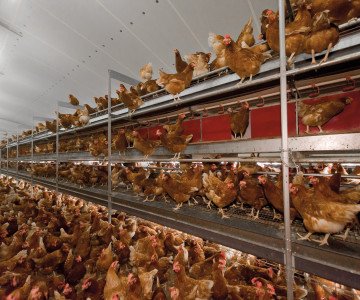
A review of lighting systems in hen housing facilities, to understand factors that can help boost flock productivity through optimising bird growth, onset of lay, desired behaviours and number of eggs laid.
Improving stockperson attitudes to chickens
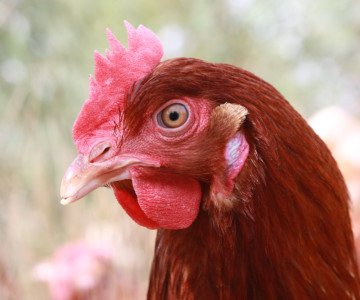
Increased positive stockperson attitudes to hens through the development of clicker training workshops.
Projects you might find interesting
Alternative protein-rich ingredients for Australian pigs and laying hens
Feed cost accounts for 70% of the production costs in farming, and any strategy to reduce it will have a significant impact on total production costs and farm profitability.
Development of single administration, slow release vaccine delivery system
This project aims to develop a single-shot, slow-release vaccine delivery system using hydrogel technology. It will investigate the best vaccine release pattern from hydrogel implants (extended “burst” verses multiple “pulses”) to induce immunity.
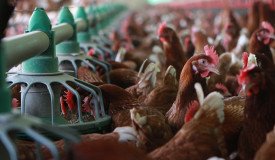
Practical strategies to increase individual layer hens feed efficiency
The overall findings of this study reveal that significant variation exists in the feed efficiency of layer hens. In this project, hens that put on more weight from the point of lay to mid-lay tended to be less feed efficient and have poorer quality eggs. The high feed efficient hens had better egg quality and were less prone to liver damage or fatty liver.
Review of rodent control for the Australian chicken meat and egg industries
This final report on current rodent control strategies employed by the Australian chicken meat and egg industries also includes a manual for producers on use of rodenticide products.
Want to see what an egg farm looks like? Take this interactive 360 degree tour to see how eggs are produced in Australia.
